
Study Investigates Potential of 3D-Printed Regenerative Breast Implants
Regenerative medicine, a rapidly advancing field, focuses on treatments aimed at repairing or replacing damaged tissues, organs, or cells to restore their function. This approach addresses issues arising from disease, aging, trauma, or congenital abnormalities.
The regenerative medicine market is projected to reach a value of $16 billion in 2023, with forecasts suggesting it could expand to $49 billion by 2028. Analysts attribute this growth to the rise of personalized medicine, the broadening of therapeutic applications, and increased regulatory approvals.
3D Bioprinting: Advancing Medical Research
3D bioprinting, a cutting-edge technology within regenerative medicine, offers immense potential for studying disease progression and testing new treatments for various conditions, ranging from end-stage organ failure to cartilage defects. The 3D bioprinting market itself is expected to grow significantly, from $2.87 billion in 2023 to $9.41 billion by 2032.
On August 28, researchers from Washington State University announced a breakthrough in using Bayesian Optimization, an artificial intelligence (AI) technique, to improve the speed and precision of 3D printing complex human organs. In their study, the team successfully trained the algorithm to accurately print models of kidneys and prostates. This innovative research was published in the journal Advanced Materials Technologies.
Meanwhile, Mark Skylar-Scott, a bioengineering professor at Stanford University, discussed in Stanford Engineering’s Future of Everything podcast how his team is working on bioprinting a living, functioning human heart, cell by cell. They are using a cell-friendly material to construct this three-dimensional biological structure, further demonstrating the potential of 3D bioprinting in regenerative medicine.
The Rise of 3D-Printed Breast Implants
In 2023, a notable advancement in 3D-printed medical solutions was seen when a 50-year-old Korean woman received a 3D-printed windpipe at St. Mary’s Hospital in Seoul, marking a significant milestone in the application of this technology.
The market for breast implants, in particular, is also experiencing significant growth. According to a report from SNS Insider Research, the breast implant market was valued at $3 billion in 2023, with expectations to exceed $5 billion by 2032. This growth is largely driven by the rising incidence of breast cancer, which affected over 2.3 million women in 2022 and resulted in 670,000 deaths globally.
The report highlights an industry shift towards improving implant procedures. In 2020, GC Aesthetics Inc., a leading cosmetic implant company from Ireland, received the CE mark for a new breast delivery device (BDD) designed to simplify the insertion of highly cohesive silicone implants with minimal touch.
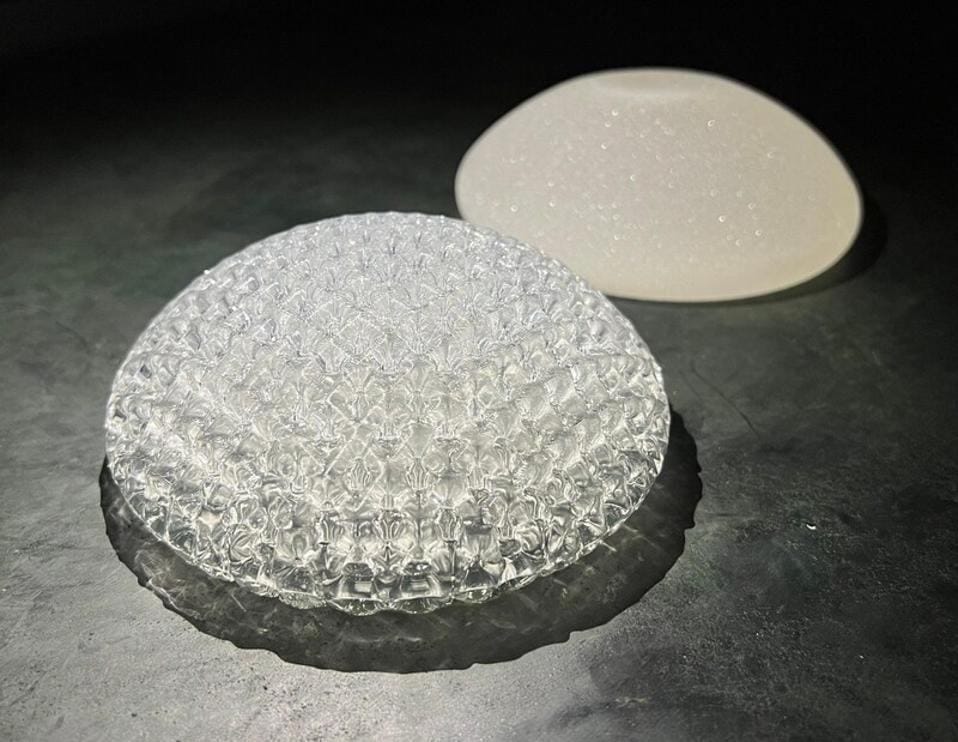
A new pre-clinical study by CollPlant and Stratasys is currently exploring the feasibility of 3D-printed, commercially viable regenerative breast implants that could regenerate natural breast tissue without triggering an immune response. CollPlant, a company specializing in regenerative and aesthetic medicine, uses plant-based recombinant human collagen (rhCollagen) for 3D bioprinting tissues and organs. This rhCollagen mirrors the type I collagen naturally produced by the human body. The breast implants in this study are being bioprinted on a Stratasys Origin 3D printer using rhCollagen-based bioink.
Initial findings from this study are anticipated by the second quarter of 2025. CollPlant has stated that their implants are designed to regenerate natural breast tissue while avoiding immune reactions. Earlier in 2024, the company reported that pre-clinical studies had already shown promising results, with well-developed connective tissue containing blood vessels and tissue growth observed within the 3D-printed implants.
This research represents a significant step forward in the development of regenerative medicine, offering hope for more natural and effective solutions for breast reconstruction.